Granite Countertop Cost: The Complete Homeowner Pricing Guide
Budgeting for a kitchen or bathroom renovation requires understanding the direct variables behind stone surface pricing. Evaluating the true granite countertop cost involves more than checking the price tag on an unpolished slab at a warehouse. The total investment reflects a combination of raw material scarcity, slab thickness, precision digital fabrication, edge profiling, and on-site professional installation.
Nationwide, installed granite prices generally span from $55 to $175 per square foot, with most full kitchen renovations landing between $3,200 and $7,500 for complete material and labor. Because granite is a completely natural igneous rock quarried across Brazil, India, Italy, and North America, geological rarity and structural integrity play major roles in the final invoice.
Whether you are remodeling a primary kitchen, updating a guest vanity, or designing an outdoor cooking station, this guide breaks down every dollar behind your project.
Quick Summary: Granite Countertop Pricing Overview
| Granite Grade & Project Tier | Material Cost (per sq. ft.) | Installed Cost (per sq. ft.) | Average Project Total (35–45 sq. ft.) | Best Suited For |
| Level 1 (Entry / Builder Grade) | $25 – $40 | $55 – $75 | $1,925 – $3,375 | Rental properties, starter homes, budget remodels |
| Level 2 (Mid-Grade / Standard) | $40 – $70 | $75 – $115 | $2,625 – $5,175 | Primary kitchens, master baths, high-traffic homes |
| Level 3+ (Exotic & Rare Quarries) | $75 – $150+ | $120 – $200+ | $4,200 – $9,000+ | Custom architectural focal points, waterfall islands |
| Prefabricated / Modular Granite | $20 – $35 | $45 – $65 | $1,575 – $2,925 | Standard straight-run galley kitchens, laundry rooms |
Direct Cost Factors: What Drives Your Final Estimate?
Understanding the components of your quote allows you to identify where to save and where investing makes functional sense.
1. Stone Tier and Geological Rarity
Stone suppliers classify granite into distinct tiers based on origin, mineral composition, background clarity, and pattern complexity:
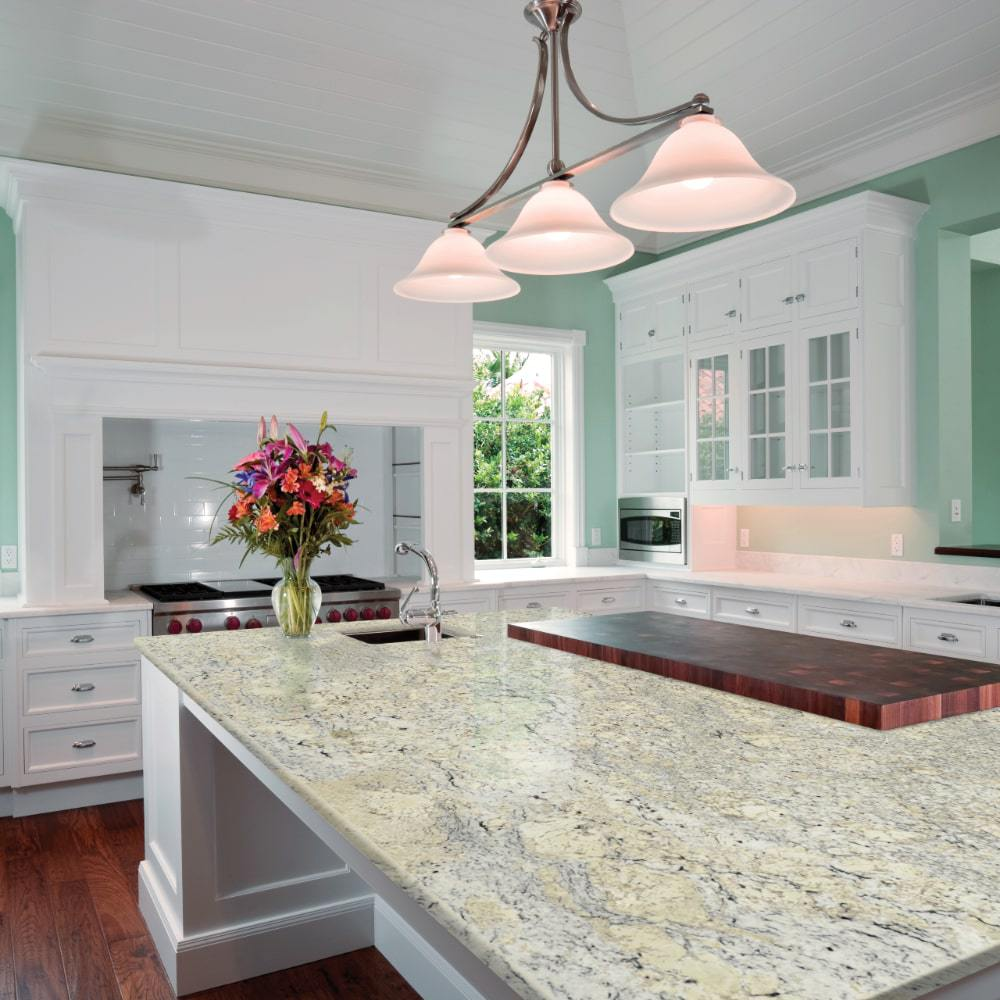
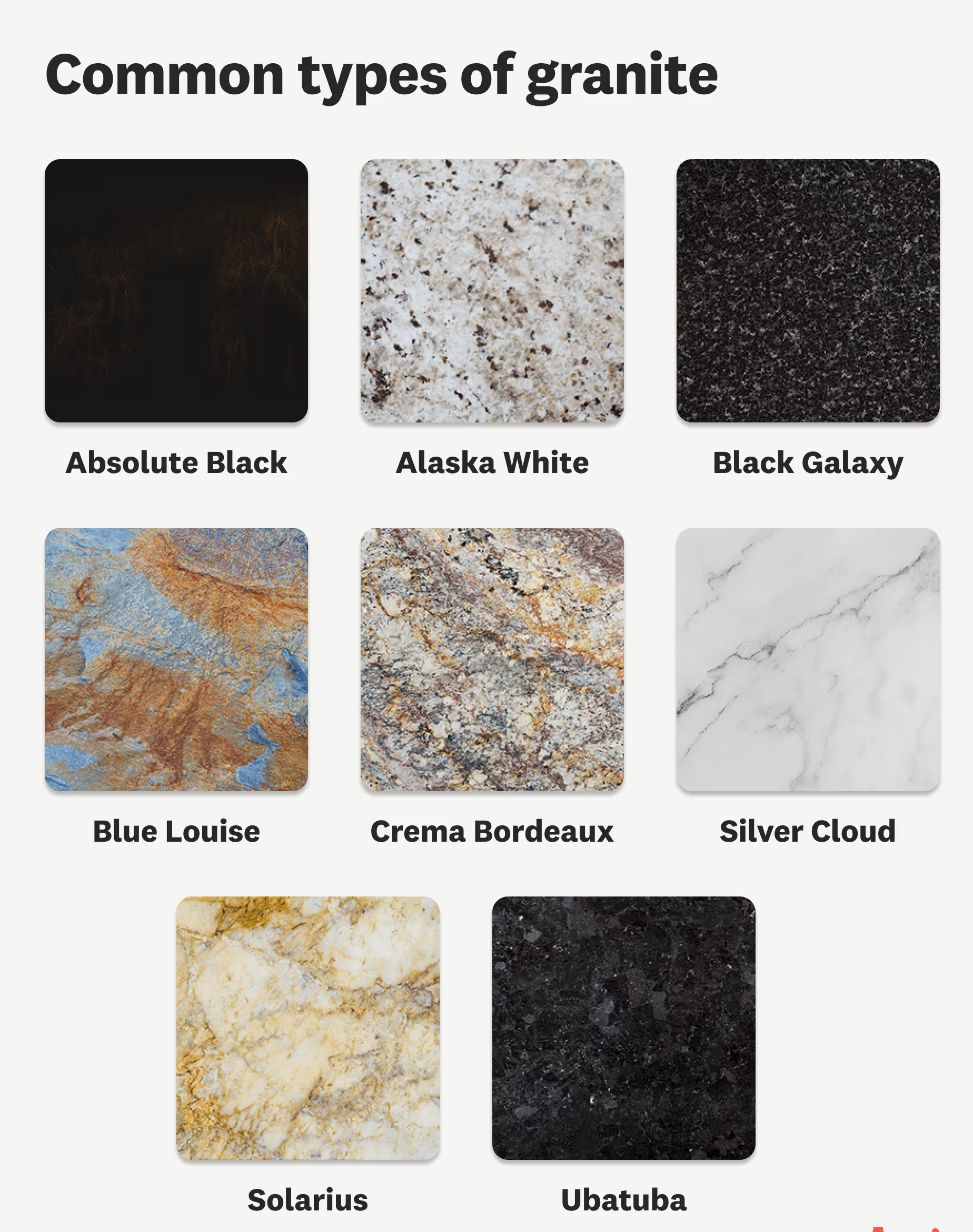
- Entry-Level (Level 1): Sourced from high-yield quarries with abundant reserves. These slabs typically feature consistent, speckled patterns in classic earth tones like beige, tan, charcoal, and soft green (e.g., Ubatuba, Santa Cecilia, New Venetian Gold).
- Mid-Grade (Level 2): Offers deeper contrast, noticeable mineral swirls, and moderate veining. These stones often contain sparkling quartz deposits and richer color variations like warm ambers, deep blues, and subtle rust tones (e.g., Giallo Ornamental, Tan Brown).
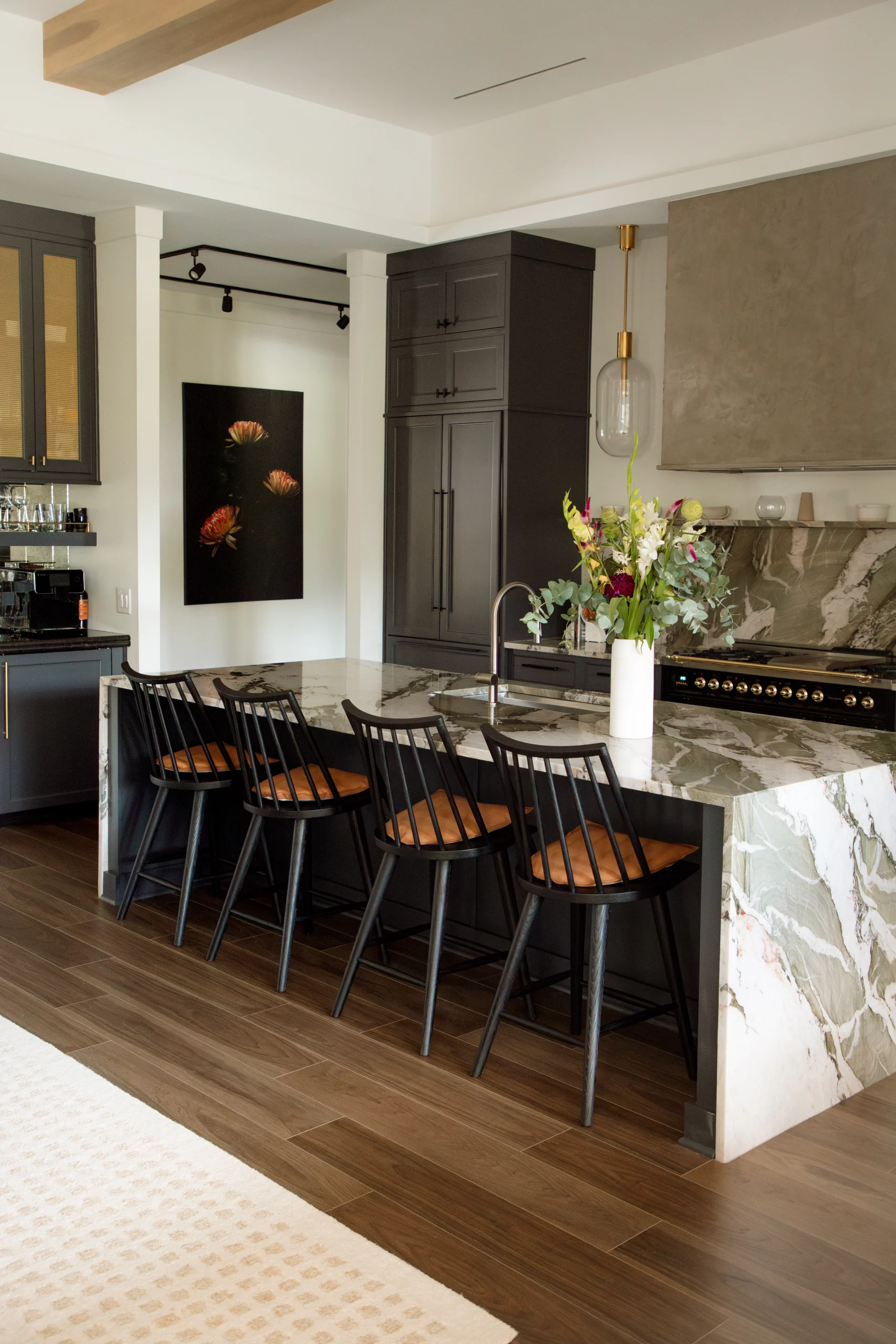
- Exotic Slabs (Level 3 and Above): Quarried in limited quantities from remote geological formations. These stones feature dramatic, sweeping river-style veining, semi-translucent quartz crystals, and rare colors such as deep emerald, vivid gold, or rich ocean blues (e.g., Blue Bahia, Van Gogh, Costa Esmeralda).
2. Slab Thickness: 2cm vs. 3cm
Granite slabs are standardly cut into two standard thicknesses:
- 2 Centimeter (approx. 3/4 inch): Slabs cost 10% to 20% less in material raw weight. However, they require a solid plywood subtop beneath the stone for structural support and often need laminated edge strips to look full-bodied, which increases labor costs and partially offsets material savings.
- 3 Centimeter (approx. 1 1/4 inch): The preferred industry standard for residential kitchens. It installs directly onto cabinet frames without underlayment plywood and provides a substantial, robust aesthetic.
3. Edge Profiles and Custom Millwork
While standard eased or slight bevel edges are typically bundled into baseline fabrication quotes, intricate edge profiles require extra machine time and diamond-polishing labor:
- Eased / Straight Edge: Included in baseline pricing
- Bevel or Half Bullnose: $12 to $20 per linear foot
- Full Bullnose or Ogee: $20 to $35 per linear foot
- Mitered Waterfall Edge: $35 to $60+ per linear foot
Detailed Project Expense Breakdown
When calculating your overall granite countertop cost, keep in mind that material selection accounts for only roughly 40% to 50% of the comprehensive bill. The remainder covers professional labor, custom tooling, and preparation.
Digital Templating and Fabrication
Professional installers use laser templating equipment to map the precise angles, cabinet irregularities, and wall bows of your kitchen. Fabrication entails cutting the slab using CNC waterjet machines, reinforcing cutouts with steel rods, and hand-polishing every exposed profile edge. Fabrication fees generally add $35 to $60 per square foot.
Fixture Cutouts
Every penetration cut into a solid stone slab requires dedicated cutting, internal reinforcement, and edge polishing:
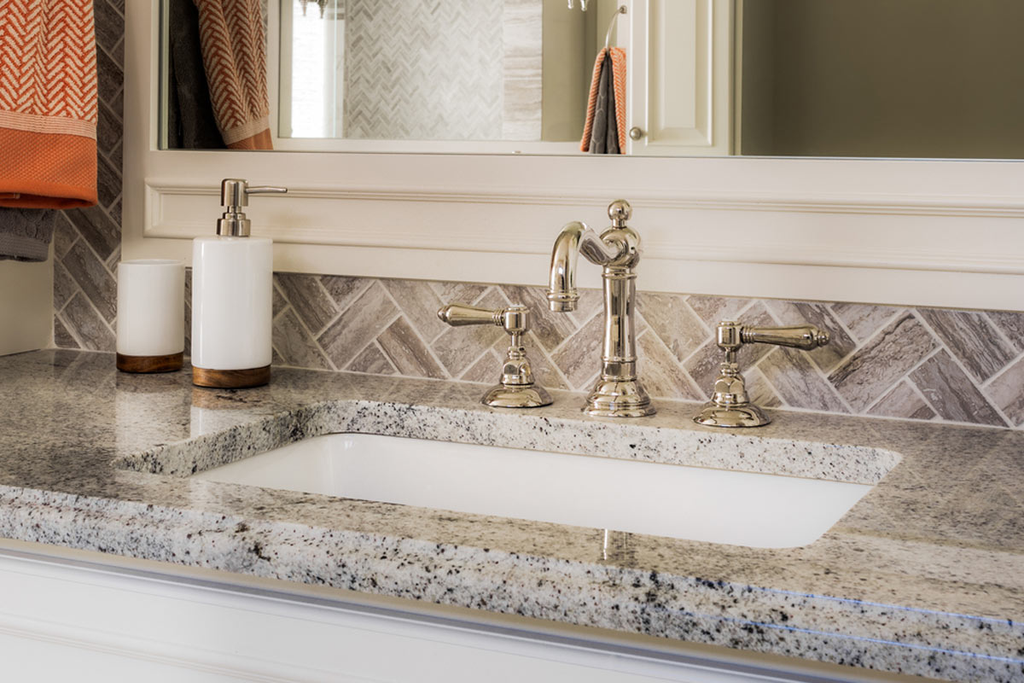
- Undermount Sink Cutouts: $150 to $300 each (includes polished bowl rim)
- Drop-In Cooktop Cutouts: $125 to $225 each
- Single Faucet / Soap Dispenser Drill Holes: $25 to $45 each
Demolition, Prep, and Structural Reinforcement
If replacing old laminate, tile, or solid surface tops, demolition and disposal add $200 to $600 to the scope of work. Because natural granite weighs between 18 and 22 pounds per square foot in 3cm thickness, cabinet boxes must be level, square, and structurally sound prior to setting the stone.
Granite vs. Other Countertop Surfaces
Evaluating natural granite alongside alternative surfacing materials helps establish whether its aesthetic and thermal qualities match your daily demands:
According to kitchen valuation data recorded by the National Kitchen & Bath Association (NKBA), natural granite remains one of the highest-rated countertop surfaces for lifetime durability and property resale appeal.
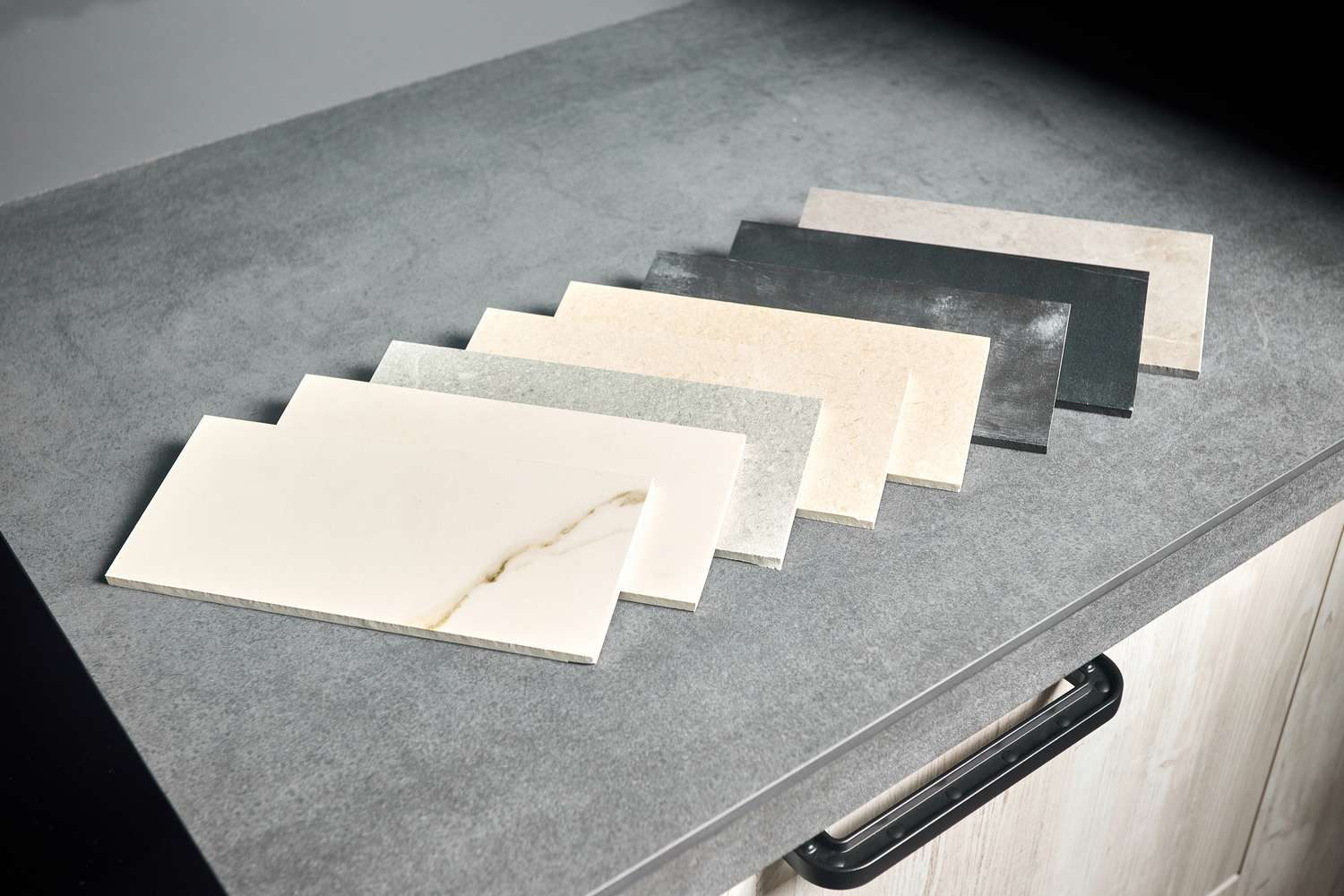
To view live stone slabs, review edge samples, or calculate an accurate estimate for your home, explore our team’s fabrication and measuring process at Set In Stone countertop installation services.
How to Optimize Your Countertop Budget
Homeowners can take practical steps to reduce total project costs without compromising on stone quality or finish:
- Leverage Remnant Slabs for Compact Layouts: For powder rooms, small islands, or laundry folding counters, fabricator remnant yards offer premium leftover stone cuts at a 30% to 50% discount compared to full slabs.
- Prioritize 3cm Slabs with Clean Eased Edges: A classic eased edge delivers a modern, clean line while avoiding secondary linear-foot shaping fees. Standard 3cm stone also eliminates the material and labor cost of plywood substructures.
- Handle Demolition Independently: Homeowners with basic carpentry experience can disconnect plumbing lines and remove old laminate or tile counters prior to template day, saving hundreds in contractor removal fees.
- Coordinate Full-Slab Yields: Skilled fabricators arrange cut patterns to maximize the surface area of a single slab, often eliminating the requirement to purchase an extra slab for a small surplus section.
Final Budget Considerations
Determining your exact granite countertop cost comes down to balancing quarry rarity against custom edge profiles and layout specifications. Natural stone’s unmatched heat tolerance, scratch resistance, and organic individuality make it a permanent, value-adding centerpiece in any home.