Best Countertops for Kitchen Spaces: The Complete Selection Guide
Choosing the surface for your culinary workspace sets the tone for your home’s interior design, routine cooking habits, and long-term resale value. The kitchen counter functions simultaneously as a prep surface, dining space, social hub, and primary aesthetic anchor. When evaluating the best countertops for kitchen upgrades, homeowners must weigh visual preferences against real-world factors such as knife resistance, porosity, heat tolerance, and maintenance demands.
Selecting the ideal slab involves balancing natural beauty with structural resilience. Every material from quarried igneous rock to engineered composite quartz features distinct mineral properties. An active household cooking daily dinners with citrus and red wine requires different surface protections than a homeowner focused primarily on luxury entertaining.
Understanding material science, edge fabrication, and preventative care ensures you invest in a surface that withstands decades of kitchen activity without staining, chipping, or dulling.
Countertop Material Comparison: At a Glance
The following comparative breakdown highlights how leading slab surfaces balance performance, ongoing upkeep, and investment tier:
| Countertop Material | Durability Rating | Maintenance Needs | Heat Resistance | Average Installed Cost | Ideal Household Match |
| Engineered Quartz | Exceptional (High flexural strength) | Zero sealing; simple soap and water cleaning | Moderate (Resin vulnerable to thermal shock above 300°F) | $65 – $140 / sq. ft. | Busy family homes wanting zero ongoing maintenance |
| Natural Granite | Outstanding (Scratch and impact resistant) | Periodic penetrating sealer (Annual check) | Excellent (Withstands hot pans directly) | $55 – $130 / sq. ft. | Serious home chefs who prioritize heat resistance and uniqueness |
| Quartzite | Superior (Harder than granite on Mohs scale) | Regular sealing required (Porosity varies by slab) | Outstanding (Natural metamorphic rock) | $80 – $180 / sq. ft. | Homeowners wanting marble aesthetics with high hardness |
| Porcelain Slabs | Very High (Non-porous, UV-stable) | Zero sealing; chemical and bleach resistant | Maximum (Completely fire and heat impervious) | $70 – $130 / sq. ft. | Modern minimalist kitchens and indoor-outdoor spaces |
| Classic Marble | Moderate (Softer calcium carbonate matrix) | High; prone to acidic etching and stains | Good heat capacity; vulnerable to thermal surface cracks | $80 – $220 / sq. ft. | Baking enthusiasts and those who appreciate natural patina |
| Butcher Block Wood | Moderate (Susceptible to cuts and water) | High; routine mineral oil applications | Poor (Scorches and burns easily) | $40 – $90 / sq. ft. | Warm rustic accents, baking stations, and accent islands |
1. Engineered Quartz: The Low-Maintenance Standard
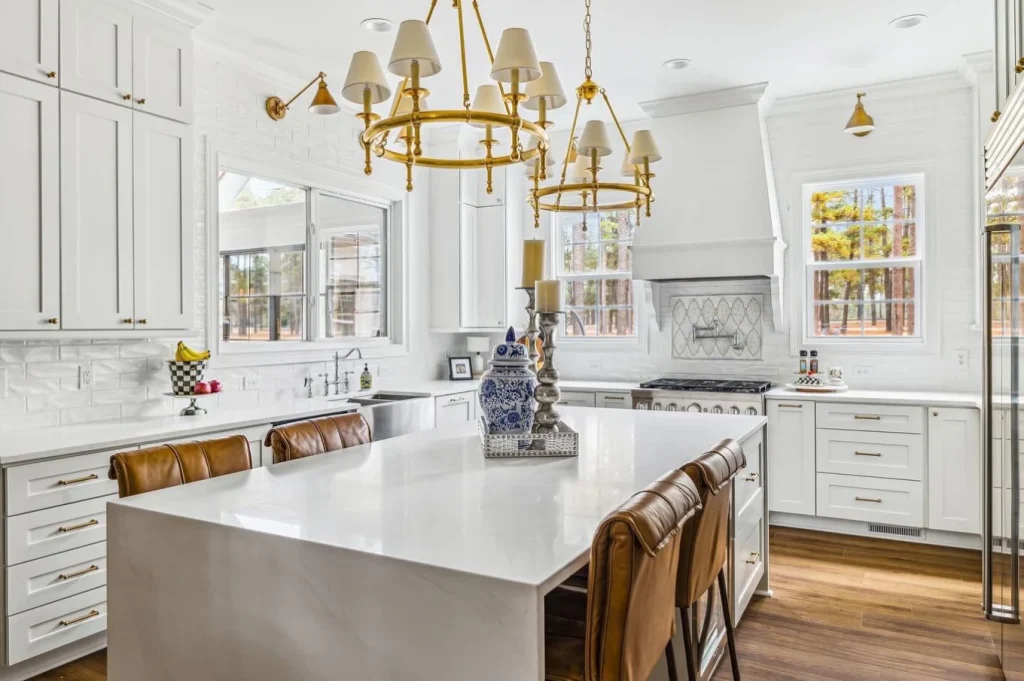
Engineered quartz has become a premier choice for homeowners searching for the best countertops for kitchen remodels. Unlike quarried slabs, quartz surfaces are fabricated using approximately 90% to 93% crushed natural quartz crystals suspended in polymer resins and mineral pigments.
Why Homeowners Choose Quartz
Because quartz is non-porous, it creates an impervious barrier against common kitchen staining agents such as coffee, turmeric, tomato paste, and red wine. Bacteria, mold, and viruses cannot penetrate the surface, making it an exceptionally hygienic food prep area. Furthermore, manufacturers can closely mimic the intricate feathery veining of Calacatta marble while maintaining consistent slab-to-slab color patterns.
Trade-offs and Cautions
The primary vulnerability of engineered quartz lies in its polymer resin binder. Excessive thermal shock can discolor or crack the surface if hot pots are placed directly on it without a trivet. Prolonged direct UV sunlight through skylights or windows can also cause light-colored resins to amber over time.
2. Natural Granite: Timeless Geological Durability
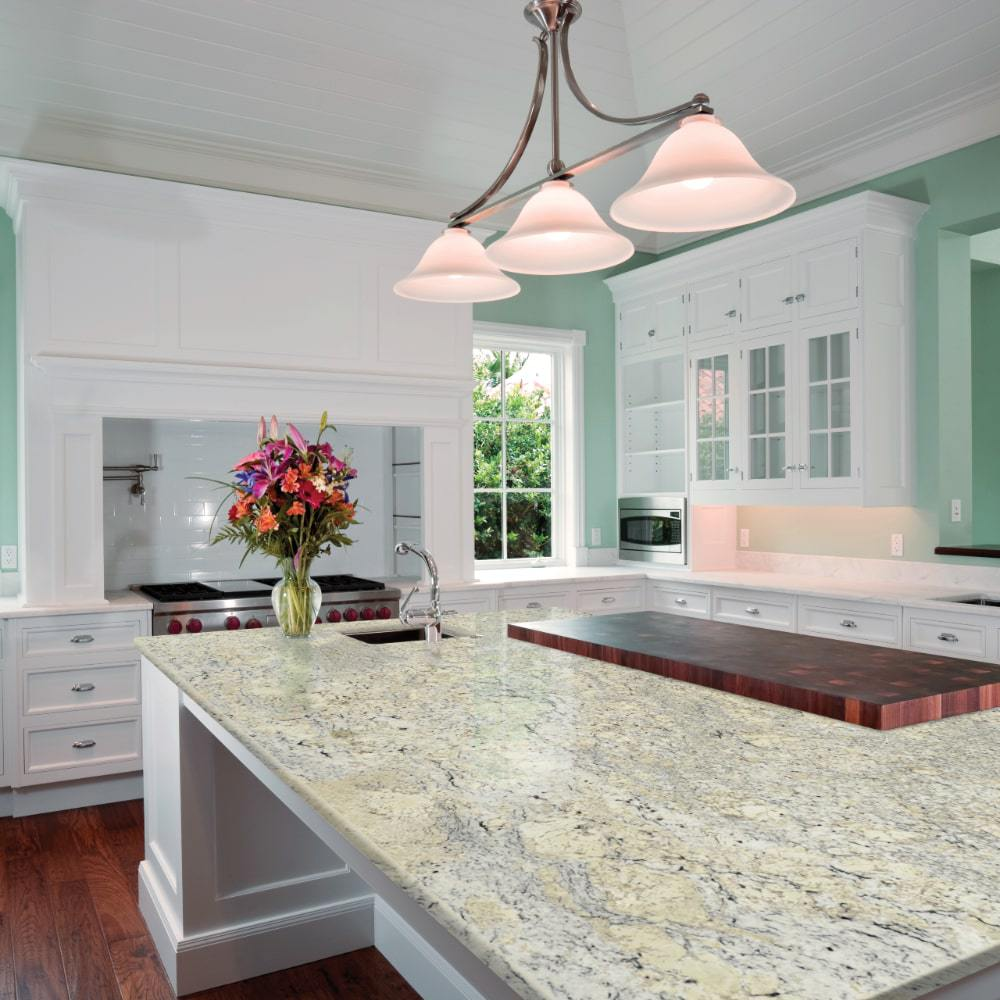
Granite remains the gold standard of geological durability. Formed deep beneath the earth’s crust under extreme pressure and heat, this igneous stone consists of quartz, feldspar, and mica. Its tight crystalline structure makes it naturally resistant to scratches, impact, and heat.
A well-installed granite countertop easily handles hot baking pans and boiling stockpots transferred straight from the burner. Granite slabs are quarried worldwide, which means every cut slab is completely unique in tone, movement, and mineral deposit.
Because it is a natural stone, granite possesses natural microscopic pores. Applying a quality penetrating impregnator creates an invisible barrier against moisture absorption. To confirm your seal is intact, test the surface with a few drops of water: if the water beads up, the stone is protected; if it darkens the rock after ten minutes, the surface needs a fresh seal.
3. Quartzite: Marble Aesthetics with Structural Hardness
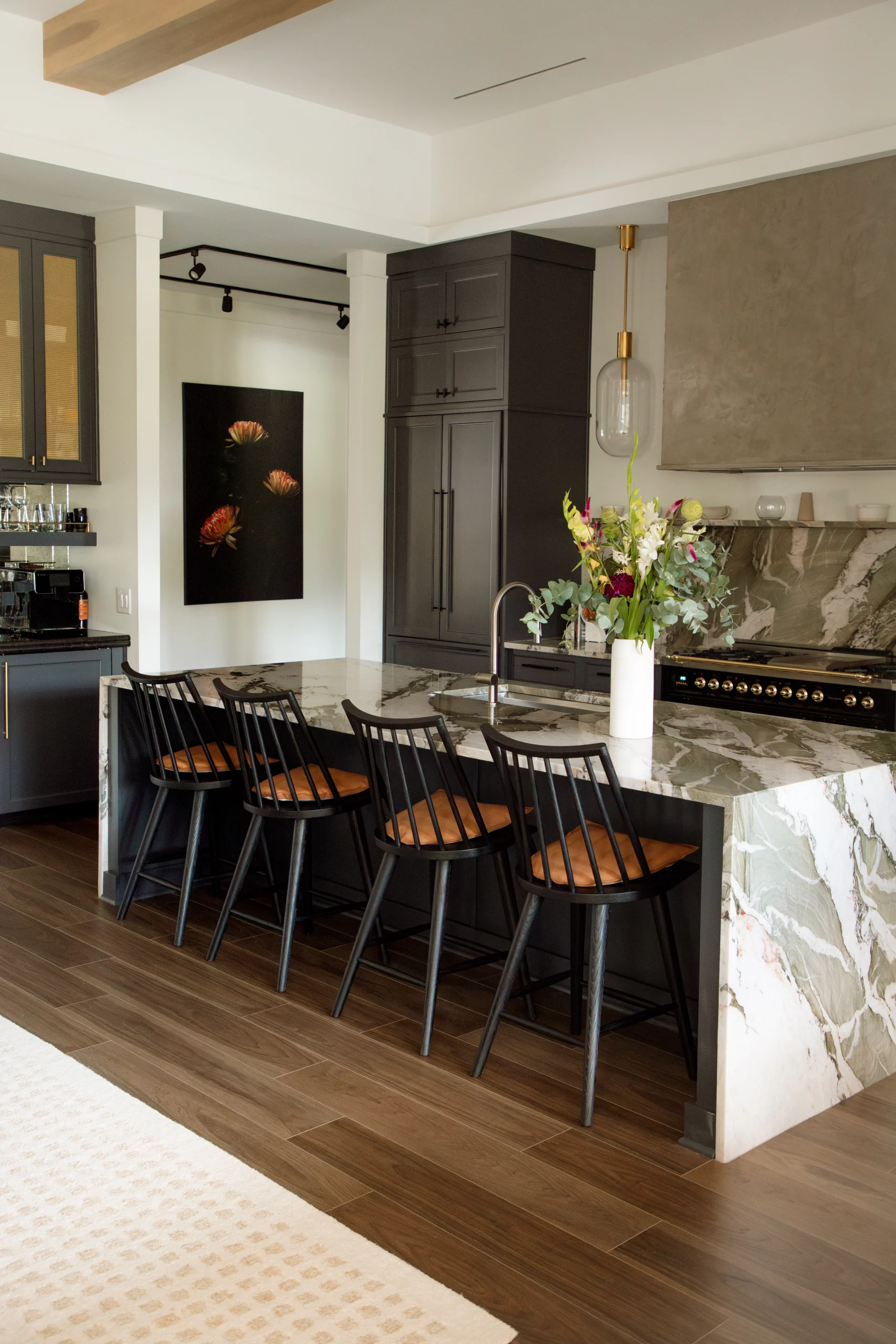
Quartzite is often confused with engineered quartz, but it is an entirely natural metamorphic rock. Quartzite began as pure sandstone and was subjected to intense tectonic heat and compression over millions of years, recrystallizing into interlocking quartz granules.
On the Mohs hardness scale, natural quartzite rates between a 7 and an 8, making it harder than both granite and knife steel. It offers the crystalline translucence and fluid, graceful veining traditionally associated with high-end Italian marble, but with far greater structural durability.
However, natural quartzite slabs vary significantly in porosity depending on their specific formation conditions. Denser varieties (such as Taj Mahal) require minimal care, while softer quartzites need diligent sealing to avoid oil absorption. Always test your exact slab before final fabrication.
4. Porcelain Slabs: The High-Performance Contender
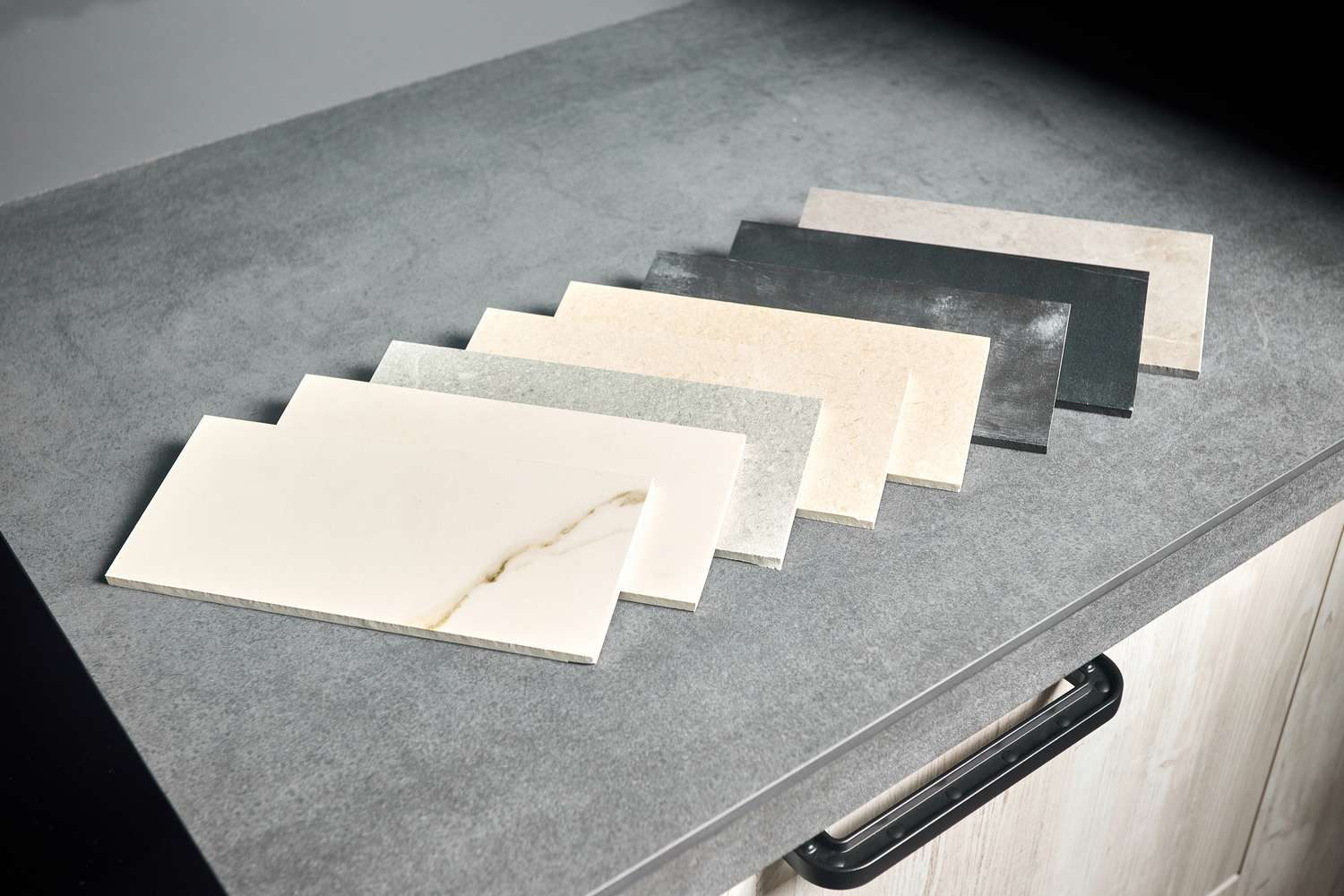
Large-format porcelain slabs are an increasingly popular choice for modern interior kitchens. Fabricated from purified kaolin clays and powdered minerals fired at temperatures exceeding 2,200°F, porcelain forms a thin, dense glass-ceramic composite.
- Impervious to Heat: Porcelain cannot burn, discolor, or smoke from direct flame exposure.
- Zero Porosity: With an absorption rate below 0.5%, it never requires sealers, waxes, or special cleaners.
- UV Stability: Mineral pigmentation runs colorfast, allowing matching indoor and outdoor patio kitchens.
- Surface Resistance: Even harsh chemicals like bleach or ammonia will not etch the glazed surface.
The main consideration with porcelain is edge fabrication. Because porcelain is a fired ceramic, raw edges can be brittle. Ensuring your fabricator crafts an eased, radius, or mitered edge profile helps prevent edge chipping from heavy pots.
5. Marble: Unmatched Luxury and Patina
Carrara, Statuario, and Calacatta marble remain iconic choices in classical interior design. Known for its cool touch and bright white background, marble has been favored by bakers and pastry chefs for centuries.
However, marble is composed of calcium carbonate, which reacts quickly to household acids. Lemon juice, vinegar, mustard, and wine chemically dissolve the top microscopic layer upon contact, resulting in a dull haze known as “etching.” While penetrating sealers prevent colored liquids from absorbing, they cannot stop acidic etching. Choosing a honed (matte) finish rather than high-gloss helps conceal minor etching, developing an authentic, lived-in European patina over decades.
For detailed guidelines on preserving fine natural stone varieties, homeowners can consult the Natural Stone Institute educational resources, which provides technical specifications regarding stone absorption rates, hardness testing, and care standards.
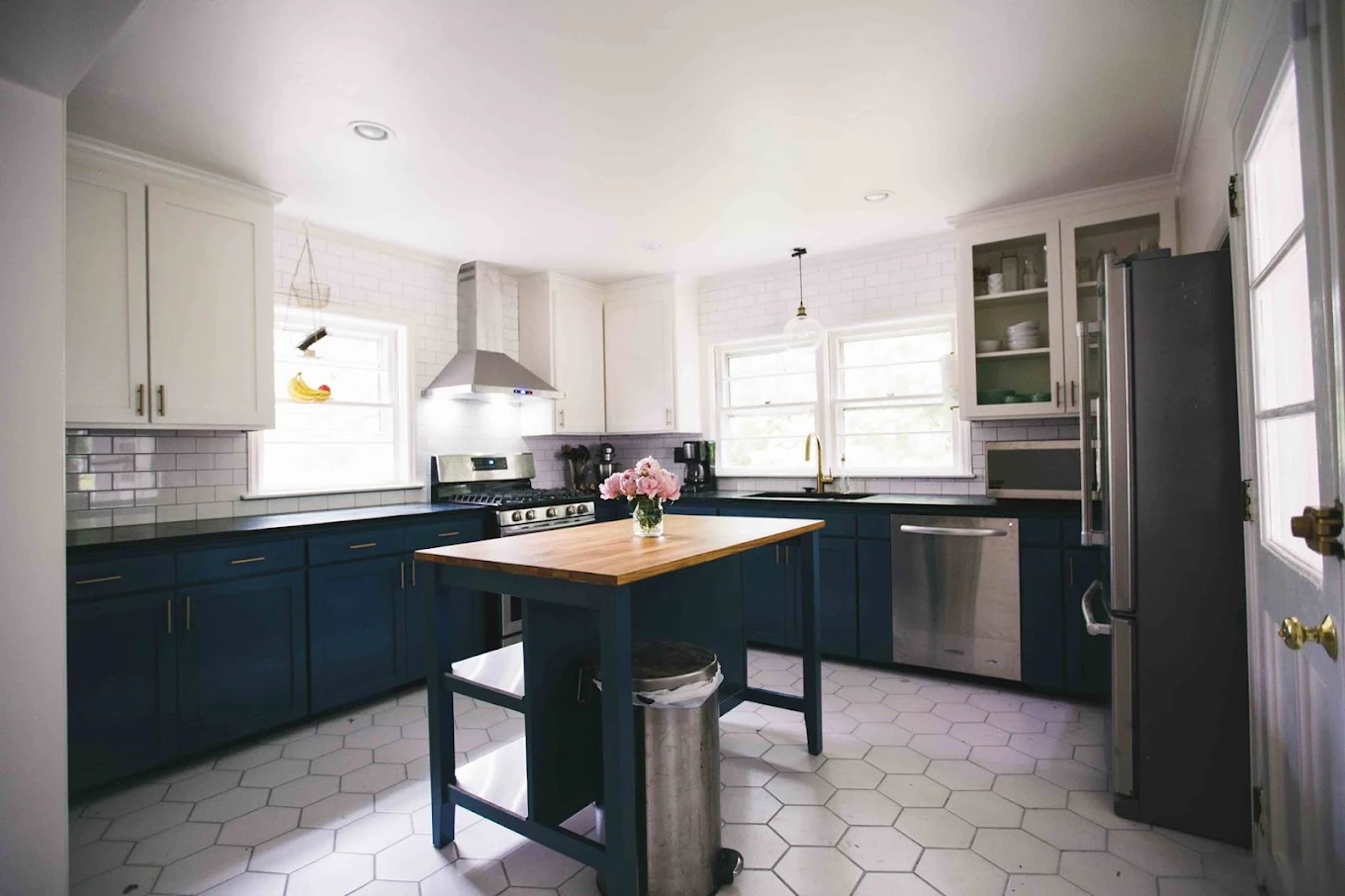
How to Determine the Best Countertops for Kitchen Workflow
Evaluating your daily routine makes it easier to select the right material for your household:
Working with experienced fabricators ensures seamless sink cutouts, reinforced structural seams, and tailored edge treatments that protect high-traffic corners. Discovering custom fabrication options through Set in Stone countertop solutions allows you to compare quarried natural slabs and modern composites to match your architectural vision.
Essential Maintenance Practices
Regardless of your chosen material, following a few baseline habits helps extend the working lifespan of your counters:
- Rely on Balanced pH Cleaners: Steer clear of abrasive scouring powders, concentrated bleach, and de-greasing sprays. Everyday maintenance requires nothing more than warm water and mild dish soap.
- Always Use Cutting Boards: While materials like granite and quartzite resist knife blades, cutting directly on the counter will quickly dull your kitchen knives and risk hairline scratches.
- Use Protective Trivets for Cookware: Protect engineered quartz slabs from direct contact with slow cookers, electric griddles, and hot pans to prevent thermal shock discoloration.
- Wipe Up Spills Promptly: Cleaning up spills like cooking oil, curry, wine, and coffee right away protects natural stone sealers and prevents stains from settling.
Selecting the best countertops for kitchen spaces comes down to balancing structural durability with everyday practicality and style. By matching stone porosity and thermal tolerance to your daily cooking habits, you create an inviting, hard-working workspace built to last.