Porcelain Countertops Pros and Cons: The Complete Homeowner Guide
Selecting the ideal worktop surface for a kitchen remodel or bathroom upgrade requires balancing aesthetic appeal, functional longevity, and daily maintenance needs. As engineered surfaces continue to evolve, modern porcelain slabs have emerged as one of the fastest-growing surface trends in residential design. Understanding the core porcelain countertops pros and cons allows homeowners to determine whether this ultra-compact material fits their culinary habits, lifestyle, and design expectations.
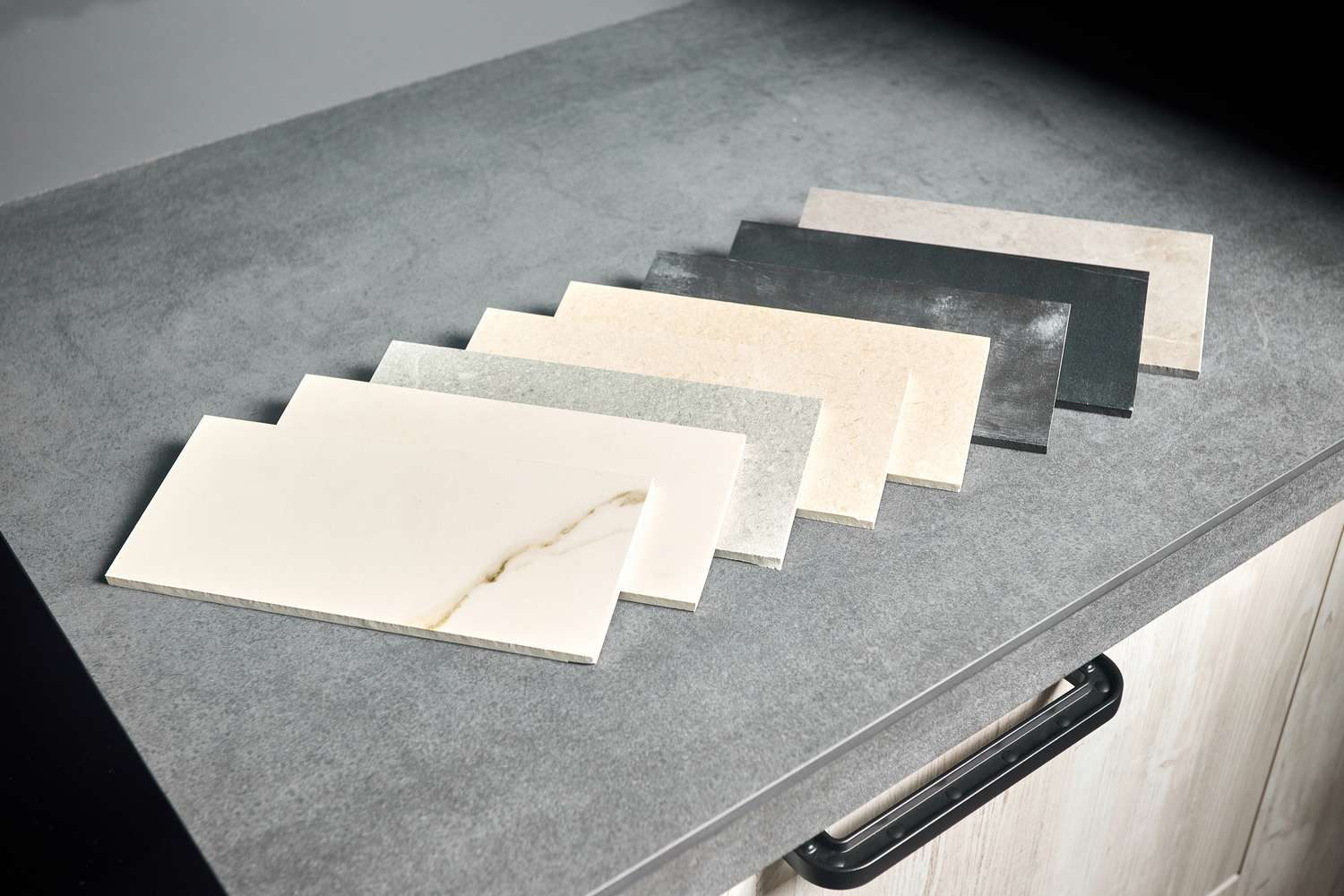
Porcelain slabs are manufactured from refined kaolin clay, feldspar, and silica, fired at temperatures exceeding 2,200°F (1,200°C). This high-heat vitrification process creates an extremely dense, impervious surface with unique performance characteristics that set it apart from traditional granite, quartz, and marble.
Direct Comparison: Pros and Cons Overview
| Feature / Metric | Advantage / Pro | Consideration / Con |
| Porosity & Staining | 100% non-porous; completely impervious to liquids | Requires specialized adhesive cleaners for dried-on film |
| Heat Resistance | Fired above 2,200°F; direct hot pan safe | Rapid thermal shock on raw uninstalled edges is possible |
| UV & Outdoor Use | Completely UV-stable; will not discolor in sunlight | Large panels require rigid, level support outdoors |
| Scratch Resistance | Extremely hard surface (Mohs 7–8); knife-safe | Ceramic cutting tools can scratch glaze layers |
| Edge Impact / Chipping | Excellent surface durability across the slab face | Mitered edges and corners can chip if struck hard |
| Fabrication & Labor | Lightweight material profile (6mm or 12mm) | Requires specialized diamond blades and certified installers |
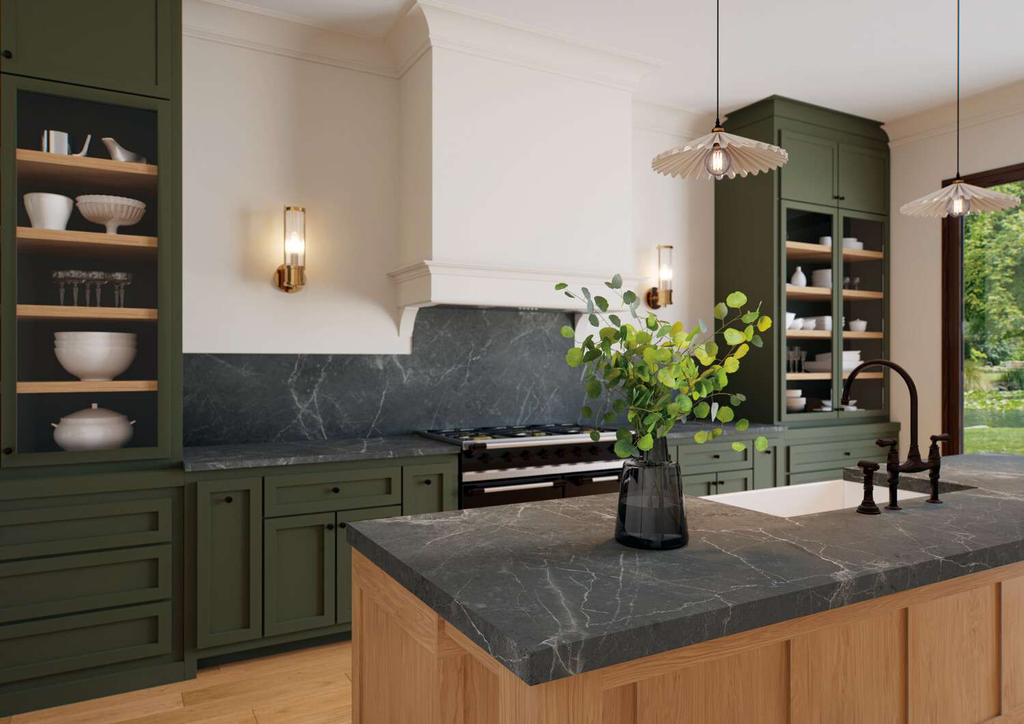
| Pattern Distribution | High-definition digital prints mimic marble | Veining is printed on surface, not through-body on standard slabs |
| Installed Cost / Sq. Ft. | Long-term value with zero maintenance expenses | Premium fabrication costs ($65 – $140 per sq. ft. installed) |
What Are Porcelain Slabs?
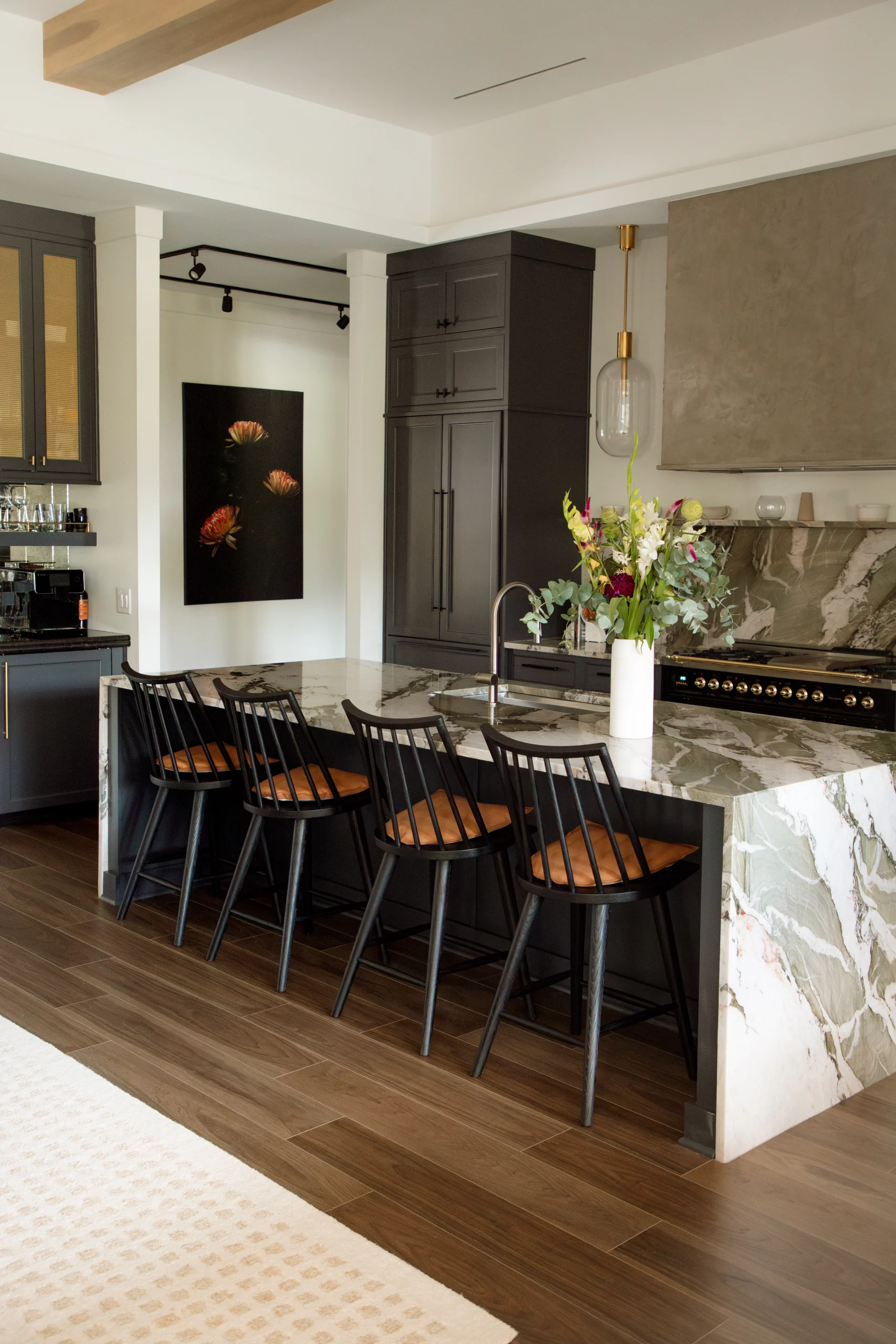
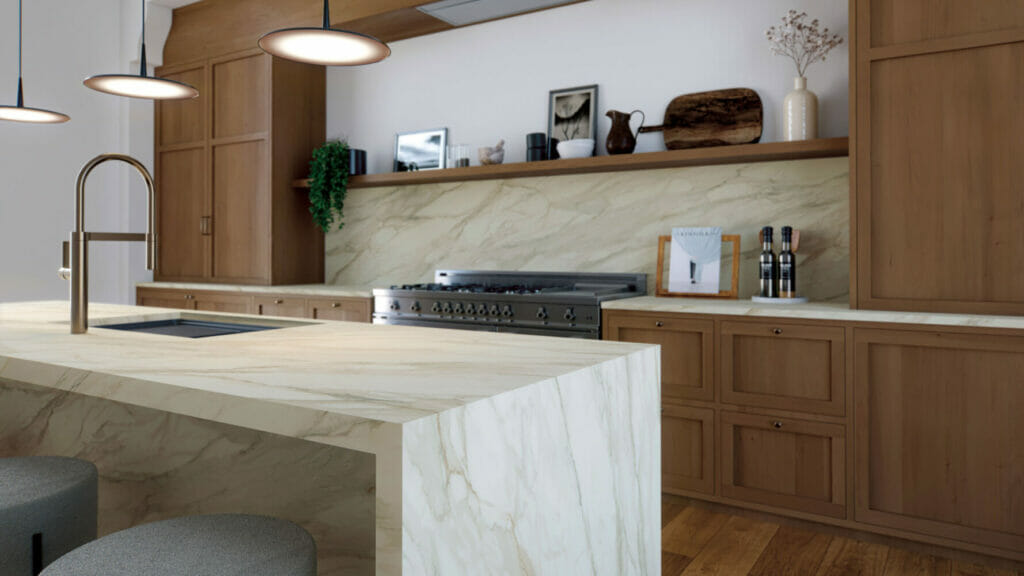
Unlike standard porcelain floor tiles that rely on heavy grout lines, modern porcelain countertops are engineered as continuous, large-format slabs. Manufacturers produce panels up to 10 by 5 feet in size, allowing for expansive island installations with minimal seams.
The production process mimics natural metamorphic rock formation but accelerates it using industrial precision. Raw minerals are crushed, blended, subjected to extreme hydraulic pressure, and sintered at ultra-high temperatures. The resulting slab is an ultra-compact surface that contains no volatile organic compounds (VOCs) and absorbs virtually zero moisture.
Detailed Analysis of Porcelain Countertops Pros and Cons
Evaluating both the operational strengths and practical limitations provides a realistic outlook on how this surface performs over decades of daily kitchen use.
The Key Advantages (Pros)
1. Unmatched Heat Tolerance
Because porcelain is created under intense heat, it handles high temperatures far better than resin-based engineered quartz or solid surface materials. You can transfer hot cookware, Dutch ovens, and baking sheets directly from an oven onto the slab without fear of scorch marks, discoloration, or resin breakdown.
2. Complete Imperviousness to Stains
Porcelain has a water absorption rate below 0.05%, making it one of the most hygienic surfaces available. Highly acidic liquids such as lemon juice, vinegar, tomato paste, and red wine will not etch or penetrate the material. Unlike natural marble or granite, porcelain requires zero chemical sealers throughout its entire lifespan.
3. UV Stability for Indoor and Outdoor Living
The mineral pigments used in porcelain slabs are inorganic and completely UV-resistant. Direct exposure to sunlight will not cause yellowing, fading, or surface dulling. This makes porcelain one of the premier choices for outdoor kitchens, covered patios, and sunlit window walls.
4. High Scratch and Wear Resistance
With a Mohs hardness rating between 7 and 8, porcelain easily resists surface scratches from steel cutlery, keys, and daily kitchen utensils. Food prep can take place directly on the surface without dulling the polished or matte finish.
The Key Drawbacks (Cons)
1. Susceptibility to Edge Chipping
While the surface plane of porcelain is remarkably durable, the material is brittle along exposed edges. Blunt impacts from heavy cast-iron skillets or metal appliances against a 90-degree corner can cause edge chips. Installing slightly rounded or beveled edge profiles significantly reduces this risk.
2. Surface-Printed Veining Patterns
On most standard porcelain slabs, the decorative pattern is applied using high-definition digital inkjet printing on the top surface. If an edge is profiled or chipped, the white or neutral clay body underneath becomes visible because the veining does not extend through the full thickness of the stone. Full-body veining technology is available but typically carries a higher price tag.
3. Demanding Fabrication and Installation
Because thin porcelain slabs can crack under uneven stress before installation, fabrication requires specialized wet-diamond tooling, bridge saws with high-speed water jets, and certified handling frames. Not all local countertop shops possess the machinery or training to cut and install large-format porcelain slabs properly.
4. Substrate Requirements
Standard 6mm and 12mm porcelain slabs require a perfectly level, rigid substrate—often high-grade plywood or specialized backing board—to support heavy loads on cabinet boxes. If the underlying cabinetry is uneven or shifts over time, unsupported spans can experience structural stress.
Performance Comparison: Porcelain vs. Alternative Surfaces
According to architectural surfacing standards tracked by the Tile Council of North America (TCNA), gauged porcelain tiles and large panels demonstrate superior tensile strength and chemical resistance when mounted to compliant structural substrates.
Cost Considerations and Budgeting
Total project investment for porcelain worktops ranges from $65 to $140 per square foot installed.
- Raw Slab Materials: Slabs generally range between $25 and $60 per square foot, depending on brand, finish (matte, satin, or polished), and whether the design includes through-body pattern technology.
- Labor and Fabrication: Due to the specialized cutting techniques, mitered edge fabrication, and delicate transport involved, installation labor generally accounts for $40 to $80 per square foot.
- Edge Customization: To create the appearance of a standard 1.5-inch or 2-inch stone slab, fabricators create a mitered apron edge, which adds linear-foot labor costs.
Homeowners can explore certified installation workflows and view slab samples directly through the Set In Stone countertop installation services to receive an accurate digital template estimate.
Who Should Choose Porcelain Countertops?
Weighing the balance of porcelain countertops pros and cons highlights specific kitchen setups where this material excels:
- Ideal For: Homeowners who want a seamless, ultra-modern aesthetic; cooks who demand hot-pan safety; outdoor kitchen builds exposed to direct sunlight; and anyone looking for zero-maintenance surfaces that never require sealing.
- Less Ideal For: High-impact utility workspaces where heavy metal objects are frequently knocked against unrounded edges, or projects with tight fabrication budgets where certified porcelain installers are unavailable.
Summary
Reviewing porcelain countertops pros and cons demonstrates that while the material demands skilled fabrication and careful edge selection, its thermal resistance, UV stability, and stain immunity rank among the highest in the residential surfacing industry. With proper professional installation, porcelain offers a high-performance architectural surface designed to last decades.